Thursday, December 06, 2012

Putting the pressure on


Wed, 05/12/2012
Egypt Independent 

The widening rift between Islamist and opposition protesters was evident Tuesday night as tens of thousands of protesters who fear that a constitution entrenching Islamist rule will be endorsed besieged the presidential palace in Heliopolis.
As secular and anti-Morsy demonstrators marched on the palace at 4 pm, their worry seemed to, at least in part, transform into joy as their numbers increased.
One of the largest marches began at Rabea al-Adawiya Mosque in Nasr City, with scores of protesters in sight for some 500 meters up Tayaran Street.

 Demonstrators chanted “The protest is peaceful, peaceful” as they pushed the barbed wire erected by security forces about 300 meters from the palace. Fifteen minutes later, the protesters were marching on the palace and riot police retreating with no resistance. But police then started hurling tear gas at the protesters around the same time eyewitnesses said the president was leaving the palace from a rear entrance. The protesters attempted to block the president's convoy but security forces prevented their advance. Cries of “Here comes the coward,” could be heard.
After a few skirmishes, the police withdrew and let the protesters advance. Presidential guards remained inside the palace and did not make an appearance.
The protesters, who remained peaceful, encircled the palace from all directions, filling Ibrahim al-Laqqany, Ahram and Mirghany Streets.
In February last year, the Muslim Brotherhood was among the ranks of protesters who marched from Tahrir Square to the palace the day President Hosni Mubarak resigned. Morsy was also among those who hailed the popular protests that brought Mubarak down, but today he finds himself on the other side of the wall.
The protesters scrawled slogans, insults and warnings on the walls of the palace.
"No to the military and to Brotherhood rule," they yelled, angry over Morsy's recent efforts to increase his powers and speed the constitution through a referendum in mid-December.
The protesters also threatened to protest in front of Morsy's private residence in the upscale Fifth Settlement neighborhood if their demands are ignored.
As the marchers invited residents in Heliopolis and Nasr City to join them, they even drew some "couch party" members, who typically forego street action.  
First-time protester Roqqaya Megahed, a Heliopolis resident in her 60s, says the country has deteriorated under military rule and added that she fears Islamists will plunge the country into darkness.
"I'm following the developments in the country and the way the [Brotherhood] are running the country," she said. "The Constitutional Declaration just made me feel that enough is enough."
As they prepare to continue a sit-in outside the palace and demonstrations in Tahrir, secular and anti-Morsy forces are buoyed by recent protest turnout. They hope Tuesday's demonstration, especially following the large Islamist rally supporting the president outside Cairo University last weekend, may show Morsy that they too can mobilize supporters.
They are also growing more confident that Morsy might give into their demands to abolish his constitutional declaration and scrap the draft constitution, or at least be persuaded to reach some compromises.   
While Islamists say the referendum on the constitution scheduled for 15 December gives the voters the final say, civil powers reject the referendum and insist that the Constituent Assembly that drafted the charter is illegitimate. The National Salvation Front, an alliance of opposition parties and groups, has endorsed the call for the president to dissolve the assembly and start over by forming a new, more representative body.
"Morsy has not proven to be the president of all Egyptians — he is the president of Islamists. Every day we become more sure that the country is moving backwards," said Mona Darwish, a laboratory physician.
Another protester, Sherine Roshdy, said some of her friends have left the country.
“This is our last battle. If we lose it, I’ll send my children to study abroad. I see no future for them here.”
Engineer Sherine Adel said, "I'm protesting because I want the country to be a home for all Egyptians. We have gotten rid of the National Democratic Party [Mubarak's former party] and we do not want a group that runs the country for its own interest."
The National Salvation Front said it is organizing more protests Friday under the title "The Red Card."
Wael Nawara, assistant secretary general of Ghad al-Thawra party, said, “The ball is in the president’s court. His slowness in responding to the demands will cause the ceiling of demands to go up by Friday. The demands will then be for the president to leave.”

Tuesday, December 04, 2012

Morsi's palace surrounded as protesters call for 'downfall of the regime'


6:53PM GMT 04 Dec 2012


Egypt's presidential palace was encircled by anti-Muslim Brotherhood protesters in a violent demonstration in Cairo, as the constitutional crisis caused by Mohammed Morsi's assumption of unchallengeable powers showed no sign of abating.


Mr Morsi was forced to leave the palace through a back door as up to 100,000 people moved in to surround it on all sides. Some stones were thrown, one hitting the rear car in the president’s convoy.
Ignoring volleys of tear gas, the protesters burst through first one then a second line of police set in the way to reach the palace, which was the site of the final act in the overthrow of former dictator Hosni Mubarak last year.
Then, as last night, demonstrators chanted: "The people want the downfall of the regime".
Mr Morsi thought he had won a significant victory on Monday, when the Supreme Judicial Council countermanded decisions by lower-ranking judges to boycott a referendum set to approve a constitution that opponents say is Islamist and fails to respect key rights. However last night's rally suggested opposition would continue.
"Thousands of people are joining us in this demonstration against the dictatorship of the Ikhwan (Brotherhood)," said Hussein Abdelghani, a spokesman for the National Salvation Front. The Front is the coalition of liberal, leftist and secular parties led by Mohammed ElBaradei, the former United Nations Atomic Agency chief, which is organising the protests.


"We are going to use any possible, civil means to send a message to both the president and the international community."
As tear gas swirled overhead, Maryam Samy, 25, a telecommunications engineer, said: "The new constitution has no compromise. They want to apply their own standards of freedom, which is not freedom.
"This constitution is worse than the Mubarak constitution. It was better under the military - we could all rebel against the military but the Brotherhood are using the poor and religion to divide society."
The rally provided a stark illustration of the dividing line that has cut across revolutionary Egypt. Saturday's marches by the Muslim Brotherhood also mustered hundreds of thousands, largely bussed in from the suburbs and the conservative provincial towns that provide the Brotherhood's base.
Yesterday's crowd was younger and more modern, with hardly any of the galabiyas, traditional Egyptian male tunics, or niqabs, full face-veils, that were widely on display on Saturday. Instead there were thousands of women, many not even wearing the head-scarf, as well as fashionably dressed young men.
Many were dismissive of the Brotherhood's supporters. Ali Sisy, the deputy editor of Masry al-Youm, one of the main liberal newspapers, said bluntly: "This is a conflict between ignorance and civilisation."
The Brotherhood insists the constitution contains basic rights and freedoms, including of speech and belief, as well as recognising Egypt's traditional, Muslim culture. It also says the referendum, set for December 15, will end Mr Morsi's self-proclaimed powers to act without judicial oversight on "sovereign matters".
It also accuses opposition leaders like Mr ElBaradei of being responsible for the impasse, since they have refused to meet Mr Morsi until he backs down on those powers. "We're glad Egyptians are able to express opinion freely and hopefully peacefully," the Brotherhood's website said. "Ballot box to decide outcome."

مليونية الإسلاميين حلم دولة الشريعة والخوف من ليبرالية العلمانيين


مجدي سمعان


جوهر الصراع السياسي في مصر يدور بين طرفين، كلا منهما يملك رؤية لما ينبغي أن يكون عليه الدستور الجديد لمصر الجديدة بعد الثورة. الثورة التي يعتبرها التيار الإسلامي اكتملت بإسقاط الرئيس مبارك، ويسوّقون لقرارات الرئيس بانه يسعون من خلال ذلك إلى "استكمال مؤسسات الدولة لإعادة الاستقرار". بينما يرى التيار المدني أن الثورة لازالت مستمرة لأن مطالبها لم تتحقق بعد، ويقف دون تحقيقها التيار الإسلامي بعد أن كان العسكر يعرقلونها.

ردا على مظاهرات التيار المدني شهدت مصر السبت الماضي الحشد الأضخم على الإطلاق للتيار الإسلامي في مظاهرة "الشرعية والشريعة"  حيث وظف التيار الإسلامي كل إمكانياته التنظيمة للرد على مظاهرات القوى غير الإسلامية المعارضة لقرارات الرئيس الإخواني محمد مرسي.

المشاركون في المظاهرةة جاءوا من مختلف محافظات الجمهورية، وخاصة من الريف. ملأت الأتوبيسات التي نقلتهم وحملت لوحات مختلف محافظات الجمهورية المنطقة المحيطة بموقع التظاهر. كانت الغالبية العظمى من المشاركين هم من المنتمين للتيار الإسلامي بمختلف تشعباته، مع مشاركة أقل ممن يتبنون مطالب وقيم التيار الإسلامي.
إذا كان التيار العلماني يحلم بدولة مدنية تحترم فيها الحقوق والحريات، فإن من شاركوا في مليونية الشرعية والشريعة لديهم أيضا حلم الدولة الإسلامية التي تحافظ على نمط حياتهم المحافظ.

"أنا ضد العلمانيين لأنهم مع الفساد الأخلاقي، والشعب المصري ضد الفساد والمفسدين" هكذا يرى محمود السيد، الذي جاء من الشرقية للمشاركة في المظاهرة.
يستمد التيار الإسلامي تأييده الرئيسي من الريف المصري المحافظ، بينما يستمد التيار المدني أنصاره من سكان المدينة في الأساس، وشريحة كبير من جيل الشباب.
الريف المصري الذي جاء منه معظم المشاركون في مظاهرة "الشرعية والشريعة" يتبنى قيما شديدة المحافظة تجد في الشريعة الإسلامية نظاما مناسبا لنمط حياتهم، الذي يضع خطوطا حمراء كثيرة أمام الحريات العامة وخاصة الفردية.  
قال حسن ثابت عمار، صاحب سلسلة محلات من المعادي: "الشريعة منهج حياة يناسب ثقافتنا" وأضاف: "الأعراف والتقاليد المصرية تتسق مع الشريعة. المجتمع المصري لا يتقبل نمط الليبرالية الغربية."
وتابع: "المسلمون والمسيحيون يتفقون في تلك التقاليد والأعراف. اساءل مسيحي، وليس مسلم، هل ترضى أن تترك ابنتك المنزل عندما تبلغ 16 عاما ويكون لها صديق. مصر ليست أوربا"
قاطعه عماد عبد الغفار يعمل سائق في بوزارة الزراعة "أنا لا أسمح لزوجتي بأن تخرج خارج المنزل. أحنا ناس فلاحين تربينا على العقيدة الإسلامية"

الخلاف حول الدستوري يلخص هذه المعركة بين التيار الإسلامي الذي يريد تطبيق مشروعه الإسلامي دون موائمات، وبين التيارات غير الإسلامية التي تريد دستور يتوافق مع المعايير الدولية للحقوق والحريات، والتي تصطدم في جزء منها مع البرنامج الإسلامي المستمد من الشريعة الإسلامية.
كل طرف لديه حلم ومخاوف، فحلم الإسلاميين هو دولة الشريعة، ومخاوفهم علي الهوية الإسلامية من سيطرة الليبراليين والعلمانيين هو خوف ليس فقط على إضعاف دور الدين، الذي يعد محورا لحياتهم، بل أيضا خوفا على نمط حياة شديد المحافظة يتبعونه.
قال هشام درويش من حدائق القبة: "القلوب متعطشة لتطبيق الشريعة. تأييدنا للرئيس ليس لشخصه وإنما تأييدنا للمشروع الإسلامي من خلاله"


صراع الشرعية والأغلبية

قاد ما يعرف بجيل الفيس بوك، الذي التف حول البرادعي، الثورة ضد الرئيس السابق حسني مبارك، وانضم لهم التيار الإسلامي لاحقا. يقول قادة الحركات الشبابية والمدنية إن الثورة التي أشعلوا شرارتها سرقت منهم، وسُلمت للتيار الإسلامي الذي يعد امتدادا للنظام العسكري.
بينما يتهم التيار الإسلامي، التيار المدني بأن احتجاجتهم في التحرير انضم لها الفلول وأن الرئيس هو من يريد حماية الثورة.

كان قادة التيار المدني الذي يحاول توحيد صفوفه وتجاوز انقساماته، هم محور الانتقادات والهتافات اليوم، وفي مقدمتهم محمد البرادعي، رئيس حزب الدستور، وحمدين صباحي زعيم التيار الشعبي، وعمرو موسى، رئيس حزب المؤتمر. من بين الهتافات: "يا برادعي ويا صباحي مرسي مرسي ليكم صاحي" كما بثت الميكروفونات المتواجدة بالمكان أغاني منها أغنية "كلنا مع القرار" تؤيد الإعلان الدستوري وتنتقد قادة التيار المدني. ومن بين مقاطعها: "حصن لينا التأسيسية عايزين مصر اسلامية، كلنا مع القرار"
كما هتف المتظاهرون: "عيش حرية شريعة اسلامية" و "عيش حرية شكرا تأسيسية" و "يا تحرير اتلم اتلم قال عايزينها بركة دم"

قال أنور قطب أعمال حرة من الجيزة، "محور الصراع هو محاربة الطرف الأخر للمشروع الإسلامي. من يفعلون ذلك ليسوا أصحاب قضية. هم يدافعون عن مصالح شخصية أكتسبوها خلال عهد مبارك، وفساد يخشون انكشافه"

يدعي كل طرف إنه يمثل الأغلبية. الإسلاميون يستندون إلى أن الشعب صوت لصالحهم في الانتخابات الماضية، وأصبح بيدهم الشرعية الانتخابية، ويعتقدون أنهم لازالوا يحوزون على ثقة الأغلبية، لذا يطرحون أن يكون الاستفتاء على التعديلات الدستورية مخرجا لهذه الأزمة، ليقرر الشعب إلى جانب أي من الموقفين يقف. لكن التيار المدني يرفض الذهاب إلى الاستفتاء، ويقول أن مواقف التيار الإسلامي التي تصطدم مع الديمقراطية وحدت البلاد ضد التيار الإسلامي، حتى أن من كان يطلق عليهم حزب الكنبة أو الأغلبية الصامتة، الذين كانوا يؤيدون الرئيس مبارك، انضموا إلى التيار المدني خوفا من ابتلاع التيار الإسلامي للدولة وتحويلها إلى دولة دينية.
قال محمد إبراهيم محاسب من المنيل القاهرة مشيرا إلى المتظاهرين، "هذا هو شعب مصر، أليس الشعب هو مصدر السلطات، والمفروض أن المحكمة الدستورية تستمد شرعيتها من الشعب"

عقب الإجتماع الذي عقده الرئيس مرسي مع أعضاء الجمعية التأسيسية للدستور سلم فيه رئيس الجمعية نسخة من مسودة الدستور إلى مرسي وطالبه بإجراء الاستفتاء عليه "اليوم قبل الغد" في ظل تهليل المتواجدين في مليونية "الشرعية والشريعة" لقرار مرسي اجراء الاستفتاء في 15 ديسمبر المقبل.
وفي ظل الحشد القومي وصراع المليونيات أبدي الكثيرين مخاوفهم من انزلاق الوضع السياسي في البلاد إلى العنف في ظل الحدة اللفظية في النقاش السياسي، والبدء في مناقشة شرعية قرارات الرئيس.
في يوم الخميس الماضي حذر الدكتور محمد البرادعي، في حوار له مع قناة "النهار" من خطورة الاستمرار في تحدي الشرعية مطالبا الرئيس بالتراجع.
 الوضع الذي يصفه البعض بأنه لا تراجع فيه من قِبل الاسلاميين ولا استسلام من قبل التيارات غير الاسلامية ينذر بالانزلاق إلى العنف كما يذهب الكثيرين، لكن اليوم مر دون مواجهات بين المتظاهرون في ميدان التحرير ومحيط جامعة القاهرة وأسيوط، وإن كانت الإسكندية شهدت مناوشات.
المشاركون في مظاهرة "الشرعية والشريعة" أكدوا على سلمية تحركاتهم، وعلى رفضهم لانزلاق الصراع السياسي إلى العنف. بالرغم من وجود بعض الشعارات التي فيها تهديد بالعنف. مثل هتاف: "يا رب يا رب دي بداية الغضب هنوريهم الأدب"
قال أنور قطب، 40 سنة أعمال حرة من الجيزة: "نحن لم نعتدي على أحد. بوادر العنف هم من بدأوا بها في حرق مقرات حزب الحرية والعدالة ومهاجمة الشرطة، وحرق مكتب الجزيرة"

لكن حرص الإسلاميين على سلمية التحركات مرهون ببقاء مرسي في موقعه، فاللجوء إلى العنف قد يسقط الشرعية عن الرئيس، في ظل مخاوف من عودة الجيش مرة أخرى في حالة خروج الأوضاع عن السيطرة.

قال هشام فهمي، 37 محاسب 6 أكتوبر: "لن يكون هناك عنف بيننا وبينهم. أخي يعارضني الرأي، ولن أقف يوما في موقف وجها لوجه مع أخي، ولو حدث عنف سأنسحب. الإسلام ينهانا عن قتل النفس. وجهادنا بالرأي وليس بالعنف"


Sunday, December 02, 2012

انقذوا مصرمن حكم شبكة الإرهاب


الملا محمد مرسي وعشيرته وحماس أسسوا شبكة متكاملة للإرهاب المحلي والإقليمي، وها هم وبكل أنواع التدليس والتزوير سيقدمون الغطاء الدستوري لمخططهم الهمجي الأسود؛ فقد حذفوا مبدأ الشرعية الجنائية وهي أهم قيم العدالة ونصها الذهبي: "لاعقوبة إلا بنص"، ومعني ذلك أن المادتين 2  و219 أصبحتا حاكمتان وموجهتان للقاضي وليس للمشرع، بمعني أن الإتهام والعقوبة يمكن أن يختلقا من بين سطور الفقه الميت، وإذا أضفنا المادة 10 التي تبيح جماعات الإرهاب بإسم "الأمر بالمعروف والنهي عن المنكر"، أصبح لدينا بنية ظلامية متكاملة للحكم واالقانون والتنفيذ تقوض دولة القانون من جذورها.  

     أعتقد أنه علي القوي المدنية أن تخرج من حيز رد الفعل إلي المبادرة المسؤولة عن إنقاذ مصر من الوضعية الجزائرية السابقة ومصير السودان والصومال، وإسقاط حكم شبكة الإرهاب بكل الوسائل ومعها الصفقة القذرة مع الإقطاع العسكري بالرعاية الأمريكية. إن كل تضحية الأن ستوفر تضحيات مروعة فيما بعد  لأن مصرنا الآن تكون أو لا تكون.    

الكاتب أمين المهدي

Morsy’s men: Sharia as an ambition, stability as an end


Egypt Independent


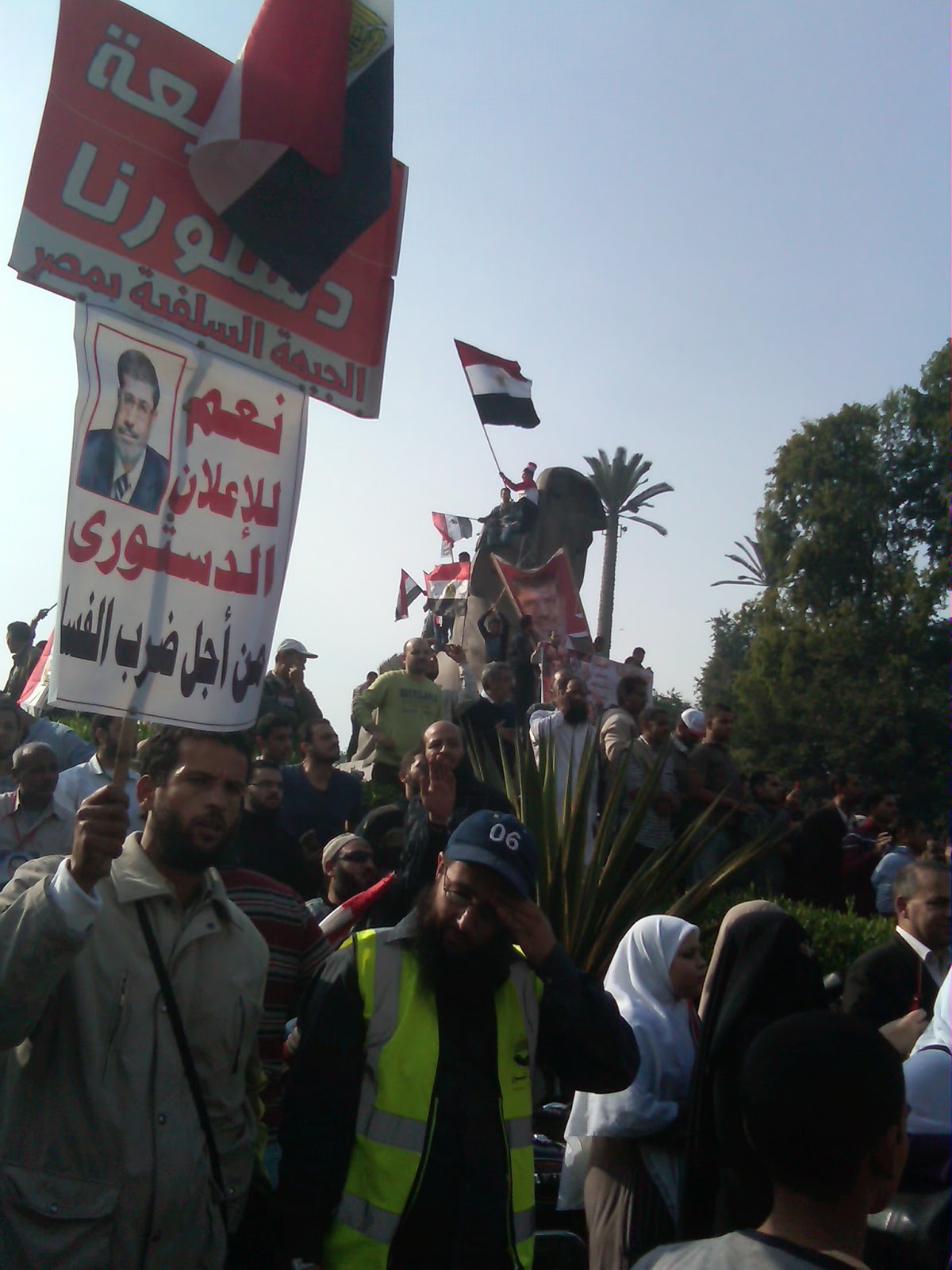
Egypt witnessed a large protest by Islamist forces on Saturday, which they dubbed the day of “Sharia and legitimacy.”
The Islamist current deployed its organizational prowess in response to widespread protests staged by secular and liberal forces against President Mohamed Morsy’s recent power grab, manifested in a new constitutional declaration issued on 22 November.
One of the byproducts of this declaration is a hastily conceived constitution, with no political consensus, which Morsy put up for a national referendum on 15 December. The declaration also exempts Morsy’s decisions from judicial oversight.
Twenty-two Islamist parties and movements, including the Muslim Brotherhood’s Freedom and Justice Party and the Salafi Nour Party, called for a “million-man” march in Nahda Square in Giza, which also happens to carry the name of the Brotherhood’s political platform. 
Hundreds of thousands gathered from the north and south of Egypt, while another mass protest was staged in the Upper Egyptian city of Assiut, bringing together Islamist followers from seven governorates in Upper Egypt.
The protests took place while an open-ended sit-in was ongoing in Tahrir Square to protest Morsy’s declaration and the constitution, which has raised eyebrows among journalists, judges, Copts, women, secularists and other groups.
The ongoing divergent protests in both Giza and Tahrir squares is symptomatic of the profound political polarization between an Islamist bloc that perceives in the new constitution an end to the revolutionary process and a non-Islamist political force that sees an ongoing revolution.
Key to this polarization is the ability of both sides to mobilize sheer numbers. While Islamists praised themselves for mastering mobilization ahead of the protests, their opponents equally managed to gather hundreds of thousands in the streets and squares of the nation throughout last week.
The Giza protest on Saturday brought in many people from outside of Cairo, particularly the countryside. They were transported by buses, which were parked around Nahda Square bearing placards with the names of different governorates.
Mohamed Ibrahim, an accountant who lives in Manial, points at the crowds of protesters and says, “These are the people of Egypt. Aren’t the people the source of power? Supposedly the Supreme Constitutional Court derives its legitimacy from the people.”
The show of support for Morsy, complete with recorded songs praising the president’s decisions, t-shirts bearing his picture and chants of “long live the president,” overpowered the Tahrir sit-in.
“The protests in Tahrir have given the impression that all Egyptians are against Morsy; we want to show that he has the real support,” says Khaled Refai, an independent Salafi standing in the crowd outside nearby Cairo University.
“I am against the secularists because they are morally corrupt. The Egyptian people are against corruption and corrupt people,” adds Mahmoud Sayed, who hails from the Delta city of Sharqiya.
“The people want God’s Sharia” and “Egypt will be Islamic despite the will of secularists and liberals” were prevalent chants.
A clear defiance and disdain was expressed toward the Tahrir protesters. Morsy supporters stressed that they are the real representatives of the majority of the people, and accused those protesting in Tahrir of being paid by the “enemies of the revolution.”
The leaders of the opposition to Morsy, such as Nobel Laureate Mohamed ElBaradei and former presidential candidates Amr Moussa and Hamdeen Sabbahi, were accused of being agents who serve foreign interests.
“Who are these people who dare talk about a president who’s looking out for the best interests of his people?” asks Ahmed Abdel Alim, a farmer who came from Upper Egypt to join the rally. “He took the necessary measures when he sensed a danger, and we sense that danger too.”
Meanwhile, Morsy’s decisions have been seen in the Giza protest as a means to combat the remains of the old regime in state institutions, as represented by the judiciary.
“Morsy has protected Egypt from becoming a state with no institutions. How can we blame the elected president for trying to protect the country?” says Hassan Shaty, a manager at the Tax Authority. Shaty shares the view of many in the rally that the judiciary has shown bias against Morsy.
The Supreme Constitutional Court had already ordered the mostly-Islamist People’s Assembly dissolved in June, deeming the parliamentary elections law unconstitutional. There were also ongoing court cases threatening the Shura Council and the Constituent Assembly before Morsy protected them from dissolution in his declaration.
“We elected him, and we are behind him until he cleans all that’s corrupt and takes us to stability,” says Mohamed Salem, a plumber who also participated in the rally.
Morsy’s power grab is seen by demonstrators as a viable transient solution, with the ultimate aim of stability. While they concede that the declaration gives Morsy absolute powers, his supporters say that they accept this temporary measure, which would only last until the constitution is passed in a referendum, cancelling all constitutional declarations.
“We want stability; we can’t keep electing bodies just to have them dissolved. Every authority is fighting for itself but where’s the right of the people? We are the source of legitimacy,” says Atef al-Sharbatly, another Morsy supporter in the rally, adding that after the judiciary was deemed biased, it couldn’t be trusted to tamper with elected bodies.
With a firm belief in the intentions and decisions of the president, and a feeling that all sides are conspiring against him, the crowd chants, “You are not alone Morsy, we are behind you.”
Support for Morsy aside, there was also a clear sense that applying Sharia was a long-awaited ambition. The constitution draft has clear stipulations about Sharia principles being the source of legislation, with its “jurisprudential and fundamental basis.”
Hassan Thabet Ammar, the owner of a chain store in Maadi, says, “Sharia is a way of life that suits our culture. Egyptian customs and traditions go in line with Sharia. The Egyptian society does not accept Western liberalism.”
“Muslims and Christians agree on these principles,” he adds. “Ask a Christian, not a Muslim, if he would accept his daughter leaving home when she reaches the age of 16 or having a boyfriend. Egypt is not Europe.”
Emad Abdel Ghaffar, an Agriculture Ministry driver, interrupts, adding, “I do not allow my wife to step outside home. We are farmers who were raised to endorse Islamic values.”  
“People are thirsty for Sharia. We do not support the president for who he is, but rather for the Islamist project he promises,” Hesham Darwish, from Hadayeq al-Qobba, says.
“Immunize the Constituent Assembly, we want Egypt to be Islamist,” is a chant that resonates throughout the protest. Protesters also chant, “Bread, freedom and Islamic Sharia” and “Bread, freedom, thank you, Constituent Assembly!” in a pun on the revolution’s landmark slogan, “Bread, freedom and social justice.”
Anwar Qotb, a self-employed man from Giza, says, “The core of the conflict is the Islamic project. ... Those fighting against that project are defending personal interests they have gained under Mubarak and corruption which they fear will be revealed.”

Friday, November 30, 2012

Morsy angers worshippers in mosque


Magdy Samaan
Egypt Independent


Worshippers at Hassan al-Sharbatly Mosque in New Cairo protested against President Mohamed Morsy while he was attending prayers there Friday, when the imam of the mosque tried to justify the president’s recent decisions.
“Prophet Mohamed and the Caliphs used to dismiss and appoint judges, and there is no problem with Morsy doing that,” the imam said, according to an eyewitness. The imam was referring to Morsy’s dismissal of the prosecutor general, which was deemed a staggering interference of the president in judicial matters.  
But worshippers stopped the imam and protested his likening Morsy to the Prophet.
The atmosphere was charged following the prayers, with some worshippers chanting, “Down with the rule of the supreme guide,” referring to the leader of the Muslim Brotherhood, from which Morsy hails.
Meanwhile, Morsy supporters in the crowd chanted the president’s name.
“The imam made a mistake and the president is to be blamed,” retired professor Hassan Abdel Kader, who was praying close to the president, told Egypt Independent.
“What the imam said angered the people and created a hubbub,” he added. “His sermon was immediately interrupted by angry worshippers.”
The ensuing chaos remained for a few minutes following the prayer. The imam asked people to calm down, saying, “No voice should be louder than the chant of ‘There is no God but Allah.’”
To end the chaos, some people called for prayer. As soon as the prayer ended, “the hubbub returned again, even more strongly,” said Hassan Awad, a retired army general, who attended the prayer.
After the end of the prayer, Morsy took the microphone and talked to the worshippers, assuring them of the independence of the judiciary.
“Morsy contained the protesters smartly, and acknowledged the judges’ rights, but at the same time his decisions are not in line with what he said in the mosque,” said Awad.
Abdel Kader said Morsy asked to talk with some of the protesters, and four young men went to talk with him for about 15 minutes.
“The protesters were more than the supporters," Abdel Kader said.
Adel Ibrahim, a journalist at Al-Ahram state daily, who attended the prayer, said four buses carrying pro-Morsy people came to attend the prayer. A security guard confirmed that. Ibrahim added that worshippers were annoyed before the start of the prayer because of the tight security measures.

Wednesday, November 28, 2012

الخوف والغضب والاحباط يوحد القوى المدنية


مجدي سمعان

دشنت مليونية "للثورة شعب يحميها" لتوحد القوة السياسية المدنية وأعادت التوازن للمشهد السياسي المنقسم بين التيارين الإسلامي والمدني. وأثمرت الدعوة للاحتجاج على الإعلان الدستوري المكمل الذي أصدره الرئيس الإخواني محمد مرسي عن خروج مئات الآف في ميدان التحرير وميادين معظم المحافظات.

امتلأ ميدان التحرير والشوارع المحيطة بأنصار الدولة المدنية، الذي جمعهم الخوف من اختطاف التيارات الدينية للثورة، والغضب على إعلان مرسي الدستوري، الإحباط من فشل الرئيس في الوفاء بوعوده، واستمرار الخطوط العريضة للنظام العسكري ذو الخطاب الديني.
 كان المشاركون في مليونية الثلاثاء من مختلف الطبقات الإجتماعية، والأعمار، هتف المشاركون: "ياللي بتسال احنا مين، أحنا كل المصريين. رجعنا تاني ومش خايفيين. واللي فاكر نفسه كبير لسه الثورة في التحرير"

شارك تامر القاضي، صاحب شركة انتاج فني، وشريف زكي، ممثل، في المظاهرات منذ يوم الجمعة الماضية، واعتصموا بالميدان الثلاث أيام السابقة على المظاهرة. عادا إلى منزلهما للاستراحة وعندما عاد مساء الثلاثاء، ذهلوا من العدد المشارك: قال القاضي"كنا نخشى بسبب انخفاض عدد المشاركين في الميدان اليومين الماضيين. الوجوه التي أراها اليوم هي نفس الوجوه التي كنا نراه في 25 و و28 يناير"
قال زكي: "سعيد جدا إن الناس لازالت واعية. مبقاش يضحك عليها باسم الإستقرار وعجلة الانتاج" وأضاف: "كانوا يعتقدون أنهم الأغلبية، ويعتقدون أن الأغلبية تعطيهم الحق في أن يفعلوا أي شيء، لكن هذا العدد الضخم الذي خرج اليوم سيعيد التوازن إلى المشهد السياسي"

انطق المتظاهرون من ثلاث نقاط تجمع في تمام الساعة 5 مساءا، حيث شارك في المسيرة التي انطلقت من أمام مسجد مصطفى محمود عشرات الآلاف في مسيرة امتدت لنحو 500 متر، وغلب على المشاركين أعضاء التيار الشعبي الذي يقوده حمدين صباحي، الذي لم يتواجد في بداية المسيرة، وانضم لها لاحقا. بينما تركز أعضاء حزب الدستور في المسيرة التي انطلقت من دوران شبرا، بقيادة الدكتور محمد البرادعي. أما المسيرة الثالثة فقد انطلقت من أمام مسجد الفتح بميدان رمسيس. إلى جانب ذلك صب في ميدان التحرير العديد من المظاهرات الأخري وأهمها مظاهرة المحامين والصحفيين والفنانين.

الهتاف الرئيسي في ميدان التحرير كان ينادي بإسقاط الرئيس، وعاد الهتاف "الشعب يريد اسقاط النظام" وأيضا: "ارحل ارحل" و"بيع بيع .. بيع الثورة يا بديع" إلا أن المطالب التي تتبناها القوى السياسية لم تصل بعد إلى السعي نحو اسقاط الرئيس، وإنما تحقيق المطالب التي تنادي بها القوى المدنية، وعلى رأسها حل الجمعية التأسيسية وتشكيل جمعية متوازنة، ومحاكمة قتلة الشهداء، من بعد الاستجابة للمطلب الرئيسي وهو إلغاء الإعلان الدستوري المكمل، وكل ما ترتب عليه.

وساهمت أزمة الإعلان الدستوري في توحيد قيادة التيار المدني بزعامة محمد البرادعي، رئيس حزب الدستور، ومعه عمرو موسى، رئيس حزب المؤتمر، وحمدين صباحي، زعيم "التيار الشعبي" فقد تم تشكل ما يسمى "جبهة الإنقاذ الوطني" كممثل لحركة التيار المدني وانضمت إليها معظم الأحزاب المدنية الرئيسية.
وانتهى يوم الثلاثاء دون حدوث أي بوادر لإنفراج الأزمة أو مبادرات لحلها، فقد صرح السفير محمد رفاعة الطهطاوي لبرنامج الحياة اليوم" إنه "لا تراجع عن الإعلان الدستوري قيد أنملة" و أعلن حمدين صباحي في المؤتمر الصحفي الذي عقد عقب الاجتماعي الذي عقدته "جبهة الانقاذ الوطني" الإثنين الماضي إنه "لا حوار مع الرئيس إلا بعد إلغاء الإعلان الدستوري". في حين رفض محمد البرادعي في مقابلة نشرتها الاثنين صحيفة المصري اليوم "لا لأي حل وسط" لهذه الازمة.
كانت بوادر الدعوة للانتفاضة ضد مرسي قد بدأت بالفعل وعادت هتافات "يسقط حكم المرشد" لكن مرسي لم ينتظر وأعطى مبررا لانتفاضة الثلاثاء بالإعلان الدستوري الذي كان مفجرا لغضب متراكم. وقد وصف محمود حسين، عضو مكتب الإرشاد لجماعة الإخوان المسلمين، عقب محاضرة ألقاها عن الربيع العربي بمسجد فنسبري بارك، أن مرسي: "تغذي بمعارضية قبل أن يتعشوا به" في حين وصف الدكتور معتز بالله عبد الفتاح، استاذ العلوم السياسية،بأنه "الدكتور مرسى أحرز هدفا فى نفسه"
قالت جميلة محمود، تعمل في مجال الإعلام: "هناك غضب ناتج عن ضياع حقوق الشهداء، يضاف إليها فشل الإدارة، وقمع الحريات، تضاف إلى الأسباب التي قامت الثورة بسببها. كل هذه اسباب للثورة ضد مرسي ومكتب الإرشاد"
لم يكن عصام حنفي، سايس في الساحة المقابلة لمسجد مصطفي محمود، راضيا على المظاهرة، ويرى أنه لا مشكلة في قرارات الرئيس، ويعتبرها "قرارات عادية" "عندما أراد السادات اتخاذ قرار الحرب قام بسجن بعض المعارضين ممن يعطلونه، وبالمثل حينما قرر عمل السلام" وأضاف: "كيف نجري انتخابات مجلس شعب وشورى ثم يأتي قاضي بجرة قلم ويلغي الانتخابات" وتابع"من يتظاهرون يحبون التظاهر ويعترضون على أي شيء، والرئيس يحق له أن يحصن قراراته من راغبي الشهرة الذين يعطلون أي شيء"

وفي ظل الضغوط المتزايدة قررت جماعة الإخوان المسلمين تأجيل المظاهرة التي دعت إليها أمام جامعة القاهرة لتأييد الإعلان الدستوري "حقنا للدماء" كما أعلنت الجماعة في بيان لها، وبالرغم من أن هذا القرار قد لاقى ارتياحا من قبل الكثيرون في ظل تكهنات باحتمال خروج الوضع عن السيطرة وحدوث تصادم بين الطرفين. إلا أن القيادي السابق بجماعة الإخوان المسلمين ثروت الخرباوي رأي أن "تأجيل مليونية الإخوان ليس هدفه حقن الدماء، لكن بسبب عدم قدرتهم على الحشد، إخوان المحافظات رفضوا المشاركة حتى لا يتركوا محافظاتهم فيتم حرق مقراتهم "
قال الدكتور عصام العريان، نائب رئيس الحرية والعدالة، لشبكة سي إن إن، إن الإعلان الدستوري الصادر عن الرئاسة مؤخراً لم ينتج عن حسابات خاطئة، وإنما يهدف إلى «منع إجهاض الثورة»، مشيرا إلى أن عددا كبيرا من الذين يشاركون في الاحتجاجات حالياً من شخصيات «تنتمي لفلول النظام السابق وهي معادية للثورة»، على حد قوله.
بينما يتهم المتظاهرون في ميدان التحرير الإخوان المسلمين بأنهم امتدادا للنظام السابق، ويستشهدون على ذلك بتكريم المشير حسين طنطاوي، وقيادات المجلس العسكري، وتعين وزير داخلية كان مسئولا عن قتل المتظاهرين في شارع محمد محمود. هتف المتظاهرون: "أحلق دقنك بين عارك تلقى وشك وش مبارك"
قال سامر مهدي، رئيس نقابة جمارك السويس، "القرار الأول الذي اتخذه مرسي عقب إصداره للإعلان الدستوري تعديل مادتين في القانون 35  لسنة 1976م المرفوض من النقابات العمالية،" وأضاف: "هذا يشير إلى مسلسل سيطرة الإخوان على كل مرافق مصر، مرسي عدل قانون مرفوض من العمال، ليمكنه من السيطرة على الاتحاد، بينما ضرب بعرض الحائط بمطالب العمال في الحريات النقابية"
القضاة هم أكثر الجهات المضارة من الإعلان الدستوري، حيث كانت غالبية بنودة تتعلق بما يمكن وصفه بالنزاع ما بين السلطة التنفيذية والسلطة التشريعية. وقد أضرب القضاة بنسبة 90% والنيابات بنسبة 100%، وسط تمسك بالموقف الرافض للإعلان الدستوري، الذي يراه القضاة أنه انتهاك صارخ لاستقلال القضاة. الذي يغل يد القضاة في نظر قرارات الرئيس،
وقد فشل اجتماع مرسي بمجلس القضاء الأعلى في التوصل لحل للأزمة، وخرج المتحدث باسم الرئاسة عقب الاجتماع الذي استمر لساعات يوم الاثنين الماضي ليعلن أنه لا تغيير في الإعلان الدستوري. ومن جانبها ترفض التيارات السياسية المدنية الحوار مع الرئيس قبل إلغاء الإعلان الدستوري، ثم التفاوض على صيغة توافقية لحل المشاكل الخلافية التي تدور حول الدستور الجديد.
ويتواصل الإعتصام بميدان التحرير في ظل دعوة لمليونية جديدة يوم الجمعة الماضية. بينما عادت جماعة الإخوان المسلمين إلى الدعوة إلى مظاهرة يوم السبت لتأييد الإعلان الدستوري، وفي ظل اعتصام القوى المدنية بالميدان، فالوضع مرشح لصدام ما لم تتراجع جماعة الإخوان المسلمين عن قرارها أو تغير مكان التظاهرة.

Opposition unites in 'state of fury'


Virginie Nguyen


Egypt Independent
Wed, 28/11/2012


Tens of thousands converged in Tahrir Square Tuesday for a show of force that promised to unite secular political powers and restore some of the balance recently lost to Islamists. The call to protest against President Mohamed Morsy's constitutional declaration was clear: "The revolution has a nation to protect. "
Cries of "The people want to bring down the regime" echoed once again throughout the square, although the most commonly voiced demands were more practical. Participants want a new, more balanced Constituent Assembly, the trial of those responsible for protester deaths and, most importantly, the abrogation of the declaration.
Morsy provoked outrage Thursday when he put himself above judicial review until a new Parliament is in place, extended the Constituent Assembly's mandate two additional months and protected it and the Shura Council from dissolution.   
Following initial protests against the decision Friday, protesters of all ages came together again Tuesday. Motivated by fear for the revolution and their rights, they pushed back against Morsy's autocratic decision and inaction on campaign promises, as well as military and religious domination of political affairs.
"A state of fury has been provoked by the loss of the rights of the martyrs, the failure to manage state affairs and the suppression of freedoms," said Gamila Mahmoud, who works in media.
Tamer al-Qady, the owner of an art production company, and actor Sherif Zaki had been in Tahrir since Friday. When they went home for a break and returned Tuesday afternoon, they said they were surprised and encouraged by the turnout.
"I am very happy that the people are still showing awareness. They no longer buy into the talk about stability and the [economic] production wheel," says Zaki. "They thought they were the majority and they believe that having the support of the majority gives them the right to do anything."
Zaki says protester numbers are proof balance is being restored.
Those numbers were aided by marches pouring into the square in the evening. Thousands of mostly Popular Current members marched from Mostafa Mahmoud Mosque and were later joined by Hamdeen Sabbahi, the group's leader.  Activist Mohamed ElBaradei led the Constitution Party from Dawaran Shubra. A third group of protesters came from Al-Fateh Mosque in Ramses Square and lawyers, journalists and actors also staged other marches.
Opposition forces have been fractured and disorganized since presidential elections, but there is evidence they are beginning to reunite. Civilian leaders such as ElBaradei, Sabbahi and former presidential candidate Amr Moussa have joined forces with their respective parties to form the National Salvation Front.
 "We will not have a dialogue with the president until he cancels the constitutional declaration," Sabbahi said Monday during a press conference for the front.  
Elbaradei, in an interview published Monday in Al-Masry al-Youm, said, "I lived my whole life believing in the importance of dialogue and working to find middle ground in diplomatic crises, but there are no compromises on principles."
He called on the international community to take action over Morsy's power play.
Standing their ground
With the chief public prosecutor removed and judges on strike to protect the judiciary's independence, the president's office initially signaled it would work toward compromise.
After a failed meeting with judges earlier in the week, however,  its rhetoric lately has suggested an unwillingness to backtrack.
The political leadership is not retreating "one iota" on the declaration, the president's chief of staff, Mohamed Refaa al-Tahtawi, told Al-Hayat 2 satellite channel Tuesday evening. 
Morsy's supporters have been equally firm in their stance.
"Morsy has pre-empted the opposition," Mahmoud Hussein, a member of the Brotherhood's Guidance Bureau, said after delivering a lecture at the Finsbury Park Mosque in London.
Parking attendant Essam Hanafy says Morsy's decisions are "normal," and that previous presidents have imprisoned their opponents to protect their decisions.
"Those protesting love revolt and will oppose anything. The president has the right to immunize his decisions against those who want fame and hamper everything."
Essam al-Erian, vice president of the Freedom and Justice Party, told CNN that the constitutional declaration was not a miscalculated step. It is intended to protect the revolution, he said,  claiming that many of those taking part in ongoing protests are “counter-revolutionary feloul.”
Civilian political powers says the abolition of the constitutional declaration is a precondition for engaging in dialogue with Morsy. They also say a consensus needs to be reached on controversial items in the new constitution. 
Amid calls for another mass protest Friday and the ongoing Tahrir sit-in, neither side appears ready for appeasement.

Egypt’s hopes betrayed


7:34AM BST 25 Jun 2012


Telegraph View: the liberal, secularist dream of Egypt's revolution has been betrayed by the army and Islamists.


Pity those liberal, secularist Egyptians who drove the revolution that ousted Hosni Mubarak 16 months ago. Like a nut, they have been cracked between the military, who have dominated the country for the past 60 years, and the Muslim Brotherhood, who claim to be moderate, but whose ultimate goal remains the imposition of sharia.
Yesterday’s announcement of Mohammed Morsi’s victory in the presidential election results from a deal between the Freedom and Justice Party, the Brotherhood’s political arm, and the Supreme Council of the Armed Forces. Under it, the military will control internal security, defence and foreign policy, leaving domestic matters largely in Mr Morsi’s hands. For the moderates, this means the threat of repression on one hand and Islamicisation on the other.
At least the Brotherhood have a legitimate claim to power, after winning both parliamentary and presidential elections. By contrast, the military – in conjunction with the supreme court – has done all it can to retain its authority. On June 14, the court ruled that the electoral law was unconstitutional and that parliament, elected last year, should be dissolved. The SCAF then arrogated to themselves the right to legislate, and to select the body producing the new constitution.
The best that can be expected is that the rival ambitions of the two sides will ensure mutual constraint. But the reversal of the timetable for democratic transition by the Supreme Council of the Armed Forces is more likely to produce bitter frustration and possibly chaos, with competing centres of power strangling desperately needed attempts to revive Egypt’s economy. Whatever happens, the hopes raised by those heady weeks in Tahrir Square have been cruelly betrayed.

Update: Tahrir full as protesters reject Morsy declaration


Wed, 28/11/2012


Tahrir Square was full after marches arrived from different Cairo neighborhoods Tuesday for a demonstration against President Mohamed Morsy’s 22 November constitutional declaration.
Dozens of parties and civil society groups had called for the protests after Morsy’s declaration last Thursday significantly expanded his powers and declared the Constituent Assembly and Shura Council immune from judicial review.
A march organized by the Tagammu Party arrived in Tahrir from Talaat Harb Street. Party members as well as members of the Socialist Youth Union and other revolutionary forces raised party flags and photos of martyrs. The march was led by Sayed Abdel Aal, the Tagammu Party secretary general, and party leaders Salah Saad and Nabil Atrees.
“We came today for Egypt and its future, as [the declaration] is a violation against citizens. We tell the Muslim Brotherhood, Egypt will not be yours and you will not be able to control it,” Abdel Aal told Al-Masry Al-Youm.
A march from Cairo University consisting of hundreds of students arrived in the square on Tuesday evening.
Protesters from Helwan and Ain Shams universities had gathered at Cairo University, chanting against Morsy, the Brotherhood, the Constituent Assembly and the recently-issued constitutional declaration. They formed a human chain along the side of the road in an effort to keep traffic moving smootly.
“Students say: we do not want remnants,” “Gaber Jika is dead and the president is responsible,” and “Kill us, no matter what, your tyranny will not affect us,” they chanted. They also carried banners reading, “No to the Brothers’ thuggery” and “Down with the supreme guide’s rule.”
Former presidential candidate Hamdeen Sabbahi led a march of thousands from Mostafa Mahmoud Mosque in Mohandiseen to the square earlier Tuesday evening.
A number of public figures including director Khaled Youssef, actress Athar al-Hakeem and producer Gamal al-Adl participated in the march, along with liberal political parties. Former MP Kamal Abu Eita, head of the independent Tax Authority workers union, also took part.
“The Muslim Brotherhood claim that they are the majority, but today we have learned that they are a minority,” protester Gamal Ahmed Ali said.
A military officer participating in the demonstrations, Brigadier General Helmy Farag, commented, “The president succeeded in one thing — he unified the divided civilian powers for the first time.”
“The people paid the price, and we are not accepting dictatorship again,” Enas Youssef, a professor at Cairo University’s faculty of mass communications, said. “The Brotherhood wants the same benefits as the formerly ruling National Democratic Party.”  
Tareq Heikel, a researcher with the National Research Center, said he was against the protest, but went to the square to watch. “If they want the fall of the president, then I assure you that Egypt will never have a president, whether he is elected or not.”
“If the opposition doesn’t like the elected president’s policies or decisions so they call for his fall, then the other side will do the same,” he explained.
A march that began in the Shubra neighborhood north of Cairo, led by former presidential candidate Khaled Ali, arrived in the square late Tuesday afternoon. Earlier news reports had said that Constitution Party leader Mohamed ElBaradei would lead the march.
The classic chants of the revolution came in loud roars, with protesters shouting, “The people want to bring down the regime,” as well as newer slogans such as, “Bread, freedom, down with Constituent Assembly.”
Several political parties also participated in the Shubra march, including the Free Egyptians party, the Social Democratic Party, the Adl Party, the Socialist Popular Alliance Party, and the Revolutionary Socialists Movement.
As he watched the march pass, one passer-by said, “It’s over. Tahrir is already full; Morsy will fall tonight.”
Protesters stressed that their large numbers prove false the Brotherhood’s claim that they represent the majority, chanting, “They said we’re a minority, we showed them a million-man march.”
Dozens of engineers belonging to the independent engineers union also marched from the union’s headquarters to Tahrir, demanding the cancellation of Morsy’s decree and the withdrawal of engineering sector representatives from the Constituent Assembly.
The engineers chanted against the Muslim Brotherhood and its Supreme Guide Mohamed Badie, while raising banners supporting the judiciary and rejecting the declaration.
Former Engineers Syndicate head candidate Tareq al-Nabarawy told Al-Masry Al-Youm that Egyptian engineers reject the declaration. He added that the Brotherhood-majority Engineers Syndicate council statement supporting the declaration was “a lie and forgery of the engineers’ will.”
Another march against the declaration composed of hundreds of Tourism Support Coalition members headed to Tahrir from the Hilton Ramses Hotel, with protesters chanting, “Bread, freedom, bringing down the Constituent Assembly.”
Coalition coordinator Ehab Moussa said, “Morsy’s latest decisions harm the tourism sector and investments in Egypt. Investors will run away after their trust in the Egyptian judiciary is shaken.”
Hundreds of political forces including the April 6 Youth Movement, the Constitution Party and the Tagammu Party gathered Tuesday evening outside the Fatah Mosque to begin marching to Tahrir. Protesters raised flags for their political parties and banners rejecting the constitutional declaration.
Free Egyptians Party secretary general in Ain Shams Mohamed al-Koumy said the march calls on Morsy to cancel the declaration. “We will bring down the regime if he does not respond. We will stage a sit-in, then announce a general strike.”
"We brought Mubarak's regime down in 18 days and we will knock Morsy and his group over in less than that."
Meanwhile, a protester was reported dead Tuesday. Talaat Fahmy said Fatehy Gharib, 60, from Matareya, died in a downtown hospital of teargas exposure.
“The security forces threw tear gas near the Socialist Popular Alliance Party’s tent in front of the Mugamma, after which Fatehy fainted,” Fahmy told Al-Masry Al-Youm.
“Fatehy was transferred to the intensive care unit at Helal Hospital where his death was announced 15 minutes later,” Fahmy said. “They killed him with tear gas. I am on my way to the hospital and lawyers are on their way to submit a complaint about the incident.”
The marches from neighborhoods throughout Cairo join thousands of protesters already in the square, chanting, “The people demand the fall of the regime,” “Down with the [Brotherhood] Supreme Guide’s rule” and “Mohamed Morsy is Mubarak.”
University students and retired officers were also present in the square, and a Wafd Party march led by party head Al-Sayed al-Badawy had set off from its headquarters towards Tahrir.
“The constitutional declaration is an assault on statehood and the rule of law,” said Mohamed Shaaban, a lawyer. “The president is seeking seize all powers, but the people will not remain silent until he moves back.”
Dozens of students affiliated with political parties also marched from Ain Shams University to the Tahrir protests, raising banners reading, “No to the new constitutional declaration.” Some students said they would take the metro to join a march staged from Cairo University.
Meanwhile, dozens of Muslim Brotherhood students distributed statements at Ain Shams University reading, “The main goal of the recent constitutional declaration is Egyptians’ interests, in order to hold retrials of protesters’ killers and allocate pensions to the injured and martyrs, as part of their rights.”